No ja marsikaj se moramo še naučiti.
Kratek ampak zanimiv članek.
http://www.siol.net/Avtomoto/Zgodovina/ ... setih.aspx
Zgodovina avtomobilizma
4 prispevkov
• Stran 1 od 1
Zgodovina avtomobilizma
 Napisal/-a CABBY dne To Feb 16, 2010 1:13 pm
A guy told me one time:" Don't let yourself get attached to anything you're not willing to walk out on in 30 seconds flat if you feel a heat around the corner."
-

CABBY - Vulvo
- Prispevkov: 2541
- Pridružen: Če Jan 26, 2006 12:01 pm
- Kraj: Celje - pravo srce Slovenije
- Avto: Alte Mercedes mit 4 ventil technik
Re: Zgodovina avtomobilizma
Napisal/-a fritz dne To Feb 16, 2010 2:25 pm
1954
Najbolj varen avtomobil petdesetih
Nekoliko nenavadno dejstvo je, da je varnostno najbolj domišljen družinski avtomobil petdesetih let preteklega stoletja razvil proizvajalec traktorjev.
Irski traktorski magnat Harry Ferguson je leta 1952 zmagal v pravdi proti Fordu in dobil zajetno odškodnino, naslednje leto pa je svojo tovarno s kanadskim tekmecem ugodno združil v Massey-Harris-Ferguson. Namesto, da bi užival v zasluženem pokoju, je že leta 1950 , ko je bil star 66 let, ustanovil raziskovalno ustanovo, ki se je ukvarjala z vodljivostjo avtomobilov na spolzkih podlagah.

Ferguson R4 se je dobro obnesel na mokri podlagi.
Leta 1954 je bil dokončan prototip avtomobila ferguson R4, ki je bil poleg štirikolesnega pogona opremljen tudi z mehanskim sistemom proti zdrsu koles, ki ga je Dunlop pod imenom "Maxaret" razvil za zavore letal. Seveda se je med preskusi na spolzki podlagi odrezal bolje od kateregakoli tedanjega avtomobila, še bolj izpopolnjen pa je bil njegov naslednik, kombi ferguson R5. Oba sta ostala v prototipni fazi. Šele butični športni avtomobil jensen FF je bil prvi serijsko opremljen s Fergusonovim štirikolesnim pogonom in sistemom proti blokiranju zavor. Predstavili so ga leta 1966, šest let po smrti Harryja Fergusona. Na prvi splošno uporabni elektronski ABS je bilo treba počakati še nekaj časa.
avtor clanka matija janezic.
------------------------------------------------------------
govora je pa o temu avtomobilu
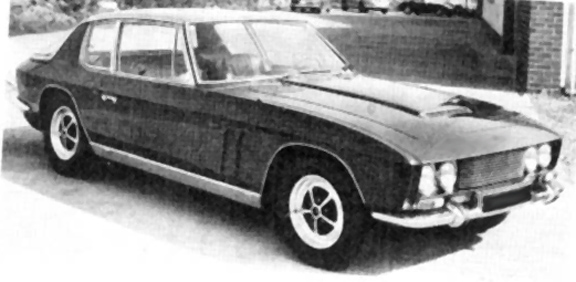
The 1966 model Jensen FF was the first vehicle to be built with anti-lock brakes.
The car was equipped with a Dunlop Maxaret electro-mechanical anti-lock
braking system which was originally developed for use on aircraft.
The 1966 Jensen FF was also the first production sports car
to be outfitted with a traction control system and 4 wheel drive.


The Jensen most widely known in Australia is the Series III Interceptor, launched in 1966, but less well known is the Jensen FF (Ferguson Formula), claimed to be the "world's first production car with all-wheel-drive and anti-lock brakes".
Harry Ferguson was an Irish tractor magnate who developed the Jensen's AWD system and the 37 per cent front and 63 per cent rear traction formula that drives it, hence the FF designation. Ferguson also developed four-wheel steering, but that turned into a disaster.
The Jensen FF came with a tubular chassis frame and Chrysler 325 hp (242 kW) 6.3-litre V8. It first rolled off the production line in September 1966 and was named "Car of the Year" by the British magazine Car. Only 320 FFs were made before production ceased in 1971
Jensen FF. Many of us are old enough to remember the shockwaves shot through the automotive world when Porsche's 959 bowed in 1986. It was like an alien had arrived and brought along all of the home planet's best technology. The FF was just as incredible in terms of technological innovation, only it added serious luxury to the mix and showed up earlier. Two-decades earlier. Powered by a Mopar big block, the Jensen FF was the first production car to offer all-wheel drive, antilock brakes and traction control. More over, the beautiful body was designed by Touring Superleggera and built by Vignale, while the entire car was assembled by hand in Britain. American power, Italian hot looks and British everything else coupled with stupefying technical innovation. I know I don't need to go on, but I will.
Introduced to the world in 1966, the FF is related to the Jensen Interceptor (produced 1966-1976). So close most people can't tell them apart. The FF cost 30 percent more than its already expensive sibling, which is one of the reasons the FF was a never a sales success, despite the press making sweet love to it (Car named it "Car of the Year" in 1967).
To make room for the extra mechanicals the FF is about half a foot longer than the Interceptor. The easiest way to distinguish the two British GTs is the diagonal vent on the front wing (the Interceptor has but one, the FF two). Note also differences like indicator lights, the front end, bumpers and what not, but just look for the double vents.
FF stands for "Ferguson Formula." Clearly not an exciting moniker, but a very important one. At age 24 Harry Ferguson (b. 1884) built and flew his own V8-powered monoplane, becoming the first man in Ireland to make a powered flight. During World War I he became involved with tractors on behalf of the Irish Government and in the 1930s convinced Henry Ford senior to build a tractor known as the Ford Ferguson. He also lost $1 million on a coin flip. Most important, though, he saw the promise of AWD for both track and street.
Harry began collaborating with racing drivers Freddie Dixon and Tony Rolt on a series of AWD prototypes. They wanted to produce both a racecar and hoped a manufacturer would become interested in a production vehicle. Then in 1960, just as his AWD F1 car (the P99) was set to debut, Ferguson dropped dead. In 1961 Sterling Moss piloted Ferguson's P99 to a win at the Oulton Park Gold Cup Race. Luckily, before Ferguson passed, he had worked out a verbal agreement with Jensen concerning his AWD formula. In 1964 Jensen Automobiles and Harry Ferguson Research finally inked a deal. The FF was going to see the light of day.
Around that time, Jensen was preparing a successor to the aesthetically challenged but nonetheless potent CV8. Luckily for pistonheads the world round, the Jensen brothers lost an internal battle to other management within the company. Unlike previous Jensens, the new car wouldn't be styled in-house, and wouldn't be made from fiberglass. No, the new cars were to have bodies crafted from Italian steel. The two-wheel drive vehicles would revive the famous appellation Interceptor, while the AWD Jensens would simply be called FF.
Because of the FF's two-ton curb weight, straight line performance wasn't staggering — 325 horsepower caused 60 mph to show up in 8 seconds, which wasn't bad for its day. Top speed was north of 140 mph. The handling, however, was staggering. Unlike in the front-heavy Interceptor, the big American heart was shoved back against the firewall to make room for all the AWD bits. This had the effect of giving the FF near 50/50 weight distribution. Via a viscous-coupling limited slip differential, torque was routed 37/63 front to rear. Journalists of the time raved about the traction and grip the FF produced, especially in the rain and snow. After driving it up a snowy Swiss ski slope Autocar described the über-GT as "the safest car in the world."
That was a bit of a stretch, considering that the mechanical Dunlop Maxaret ABS system (developed for airplanes) only pulsed the brakes three times a second compared to 20 times per second in modern systems. As a result, the traction control (which, like on many modern cars, was a function of ABS) wasn't so hot either. Still, at a time when most cars had four-wheel drums, the FF was quite a feat. Just as nifty, the four-way adjustable shocks could be controlled via a rocker switch inside the cabin. And what a glorious cabin! Rich, cosseting leather was everywhere wood wasn't, and, well, just have a look at the back seat.
The world's first AWD road car did have one major design flaw. It only came as a right-hand driver. Due to the messy nature of mashing Ferguson's "Teramala" transmission into Chrysler's TorqueFlite, the engine was mounted off-center and the shaft driving the front wheels intruded into the passenger area. Thus, it was impossible to build the FF in left-hand drive. Tragically, America was Jensen's biggest market. Couple that with the as-much-as-a-house price (more than one house in some cases) and demand wasn't exactly heavy. Out of the 320 FFs built, only one was sold in the States.
Despite the small production run, the FF is a hugely influential machine. Years later Audi bought an FF to study while researching AWD for their upcoming Quattro. All modern AWD cars use a variation of Ferguson's Formula transmission. Not surprisingly, the FF attracted a host of famous owners including an MI6 agent, an RAF pilot on which the character of the Forger in "The Great Escape" was based and a bunch of rock drummers. Good ones, too. Mitch Mitchell from the Jimi Hendrix Experience had one (and supposedly Jimi drove it just before he died), the great John Bonham had two and Ginger Baker of Cream had three, putting the FF into Citroen SM territory in terms of hot-shit owners. Nearly. Point is, If you had the means you too could have what was at the time, the car.

Najbolj varen avtomobil petdesetih
Nekoliko nenavadno dejstvo je, da je varnostno najbolj domišljen družinski avtomobil petdesetih let preteklega stoletja razvil proizvajalec traktorjev.
Irski traktorski magnat Harry Ferguson je leta 1952 zmagal v pravdi proti Fordu in dobil zajetno odškodnino, naslednje leto pa je svojo tovarno s kanadskim tekmecem ugodno združil v Massey-Harris-Ferguson. Namesto, da bi užival v zasluženem pokoju, je že leta 1950 , ko je bil star 66 let, ustanovil raziskovalno ustanovo, ki se je ukvarjala z vodljivostjo avtomobilov na spolzkih podlagah.
Ferguson R4 se je dobro obnesel na mokri podlagi.
Leta 1954 je bil dokončan prototip avtomobila ferguson R4, ki je bil poleg štirikolesnega pogona opremljen tudi z mehanskim sistemom proti zdrsu koles, ki ga je Dunlop pod imenom "Maxaret" razvil za zavore letal. Seveda se je med preskusi na spolzki podlagi odrezal bolje od kateregakoli tedanjega avtomobila, še bolj izpopolnjen pa je bil njegov naslednik, kombi ferguson R5. Oba sta ostala v prototipni fazi. Šele butični športni avtomobil jensen FF je bil prvi serijsko opremljen s Fergusonovim štirikolesnim pogonom in sistemom proti blokiranju zavor. Predstavili so ga leta 1966, šest let po smrti Harryja Fergusona. Na prvi splošno uporabni elektronski ABS je bilo treba počakati še nekaj časa.
avtor clanka matija janezic.
------------------------------------------------------------
govora je pa o temu avtomobilu
The 1966 model Jensen FF was the first vehicle to be built with anti-lock brakes.
The car was equipped with a Dunlop Maxaret electro-mechanical anti-lock
braking system which was originally developed for use on aircraft.
The 1966 Jensen FF was also the first production sports car
to be outfitted with a traction control system and 4 wheel drive.
The Jensen most widely known in Australia is the Series III Interceptor, launched in 1966, but less well known is the Jensen FF (Ferguson Formula), claimed to be the "world's first production car with all-wheel-drive and anti-lock brakes".
Harry Ferguson was an Irish tractor magnate who developed the Jensen's AWD system and the 37 per cent front and 63 per cent rear traction formula that drives it, hence the FF designation. Ferguson also developed four-wheel steering, but that turned into a disaster.
The Jensen FF came with a tubular chassis frame and Chrysler 325 hp (242 kW) 6.3-litre V8. It first rolled off the production line in September 1966 and was named "Car of the Year" by the British magazine Car. Only 320 FFs were made before production ceased in 1971
Jensen FF. Many of us are old enough to remember the shockwaves shot through the automotive world when Porsche's 959 bowed in 1986. It was like an alien had arrived and brought along all of the home planet's best technology. The FF was just as incredible in terms of technological innovation, only it added serious luxury to the mix and showed up earlier. Two-decades earlier. Powered by a Mopar big block, the Jensen FF was the first production car to offer all-wheel drive, antilock brakes and traction control. More over, the beautiful body was designed by Touring Superleggera and built by Vignale, while the entire car was assembled by hand in Britain. American power, Italian hot looks and British everything else coupled with stupefying technical innovation. I know I don't need to go on, but I will.
Introduced to the world in 1966, the FF is related to the Jensen Interceptor (produced 1966-1976). So close most people can't tell them apart. The FF cost 30 percent more than its already expensive sibling, which is one of the reasons the FF was a never a sales success, despite the press making sweet love to it (Car named it "Car of the Year" in 1967).
To make room for the extra mechanicals the FF is about half a foot longer than the Interceptor. The easiest way to distinguish the two British GTs is the diagonal vent on the front wing (the Interceptor has but one, the FF two). Note also differences like indicator lights, the front end, bumpers and what not, but just look for the double vents.
FF stands for "Ferguson Formula." Clearly not an exciting moniker, but a very important one. At age 24 Harry Ferguson (b. 1884) built and flew his own V8-powered monoplane, becoming the first man in Ireland to make a powered flight. During World War I he became involved with tractors on behalf of the Irish Government and in the 1930s convinced Henry Ford senior to build a tractor known as the Ford Ferguson. He also lost $1 million on a coin flip. Most important, though, he saw the promise of AWD for both track and street.
Harry began collaborating with racing drivers Freddie Dixon and Tony Rolt on a series of AWD prototypes. They wanted to produce both a racecar and hoped a manufacturer would become interested in a production vehicle. Then in 1960, just as his AWD F1 car (the P99) was set to debut, Ferguson dropped dead. In 1961 Sterling Moss piloted Ferguson's P99 to a win at the Oulton Park Gold Cup Race. Luckily, before Ferguson passed, he had worked out a verbal agreement with Jensen concerning his AWD formula. In 1964 Jensen Automobiles and Harry Ferguson Research finally inked a deal. The FF was going to see the light of day.
Around that time, Jensen was preparing a successor to the aesthetically challenged but nonetheless potent CV8. Luckily for pistonheads the world round, the Jensen brothers lost an internal battle to other management within the company. Unlike previous Jensens, the new car wouldn't be styled in-house, and wouldn't be made from fiberglass. No, the new cars were to have bodies crafted from Italian steel. The two-wheel drive vehicles would revive the famous appellation Interceptor, while the AWD Jensens would simply be called FF.
Because of the FF's two-ton curb weight, straight line performance wasn't staggering — 325 horsepower caused 60 mph to show up in 8 seconds, which wasn't bad for its day. Top speed was north of 140 mph. The handling, however, was staggering. Unlike in the front-heavy Interceptor, the big American heart was shoved back against the firewall to make room for all the AWD bits. This had the effect of giving the FF near 50/50 weight distribution. Via a viscous-coupling limited slip differential, torque was routed 37/63 front to rear. Journalists of the time raved about the traction and grip the FF produced, especially in the rain and snow. After driving it up a snowy Swiss ski slope Autocar described the über-GT as "the safest car in the world."
That was a bit of a stretch, considering that the mechanical Dunlop Maxaret ABS system (developed for airplanes) only pulsed the brakes three times a second compared to 20 times per second in modern systems. As a result, the traction control (which, like on many modern cars, was a function of ABS) wasn't so hot either. Still, at a time when most cars had four-wheel drums, the FF was quite a feat. Just as nifty, the four-way adjustable shocks could be controlled via a rocker switch inside the cabin. And what a glorious cabin! Rich, cosseting leather was everywhere wood wasn't, and, well, just have a look at the back seat.
The world's first AWD road car did have one major design flaw. It only came as a right-hand driver. Due to the messy nature of mashing Ferguson's "Teramala" transmission into Chrysler's TorqueFlite, the engine was mounted off-center and the shaft driving the front wheels intruded into the passenger area. Thus, it was impossible to build the FF in left-hand drive. Tragically, America was Jensen's biggest market. Couple that with the as-much-as-a-house price (more than one house in some cases) and demand wasn't exactly heavy. Out of the 320 FFs built, only one was sold in the States.
Despite the small production run, the FF is a hugely influential machine. Years later Audi bought an FF to study while researching AWD for their upcoming Quattro. All modern AWD cars use a variation of Ferguson's Formula transmission. Not surprisingly, the FF attracted a host of famous owners including an MI6 agent, an RAF pilot on which the character of the Forger in "The Great Escape" was based and a bunch of rock drummers. Good ones, too. Mitch Mitchell from the Jimi Hendrix Experience had one (and supposedly Jimi drove it just before he died), the great John Bonham had two and Ginger Baker of Cream had three, putting the FF into Citroen SM territory in terms of hot-shit owners. Nearly. Point is, If you had the means you too could have what was at the time, the car.
-

fritz - Wheel whore
- Prispevkov: 13394
- Pridružen: Sr Jan 25, 2006 10:52 pm
- Kraj: tanajtabujsiklima
- Avto: Golf Rallye G60
Re: Zgodovina avtomobilizma
Napisal/-a tomos90 dne To Jun 01, 2010 11:06 pm
Nisem vedel kam naj dam ta članek, pa mislim da bo za sem.
VW-jev D-jetronic ... http://www.siol.net/Avtomoto/Zgodovina/ ... vanje.aspx
VW-jev D-jetronic ... http://www.siol.net/Avtomoto/Zgodovina/ ... vanje.aspx
-

tomos90 - Stalni uporabnik
- Prispevkov: 621
- Pridružen: Ne Mar 14, 2010 9:41 pm
- Kraj: Novo mesto
- Avto: VW T3 Multivan
Re: Zgodovina avtomobilizma
Napisal/-a tomos90 dne To Jun 01, 2010 11:29 pm
Pa še nekej sem najdu ... http://www.siol.net/avtomoto/zgodovina/ ... _1980.aspx
-
tomos90 - Stalni uporabnik
- Prispevkov: 621
- Pridružen: Ne Mar 14, 2010 9:41 pm
- Kraj: Novo mesto
- Avto: VW T3 Multivan
4 prispevkov
• Stran 1 od 1
Kdo je na strani
Po forumu brska: 0 registriranih uporabnikov in 3 gostov